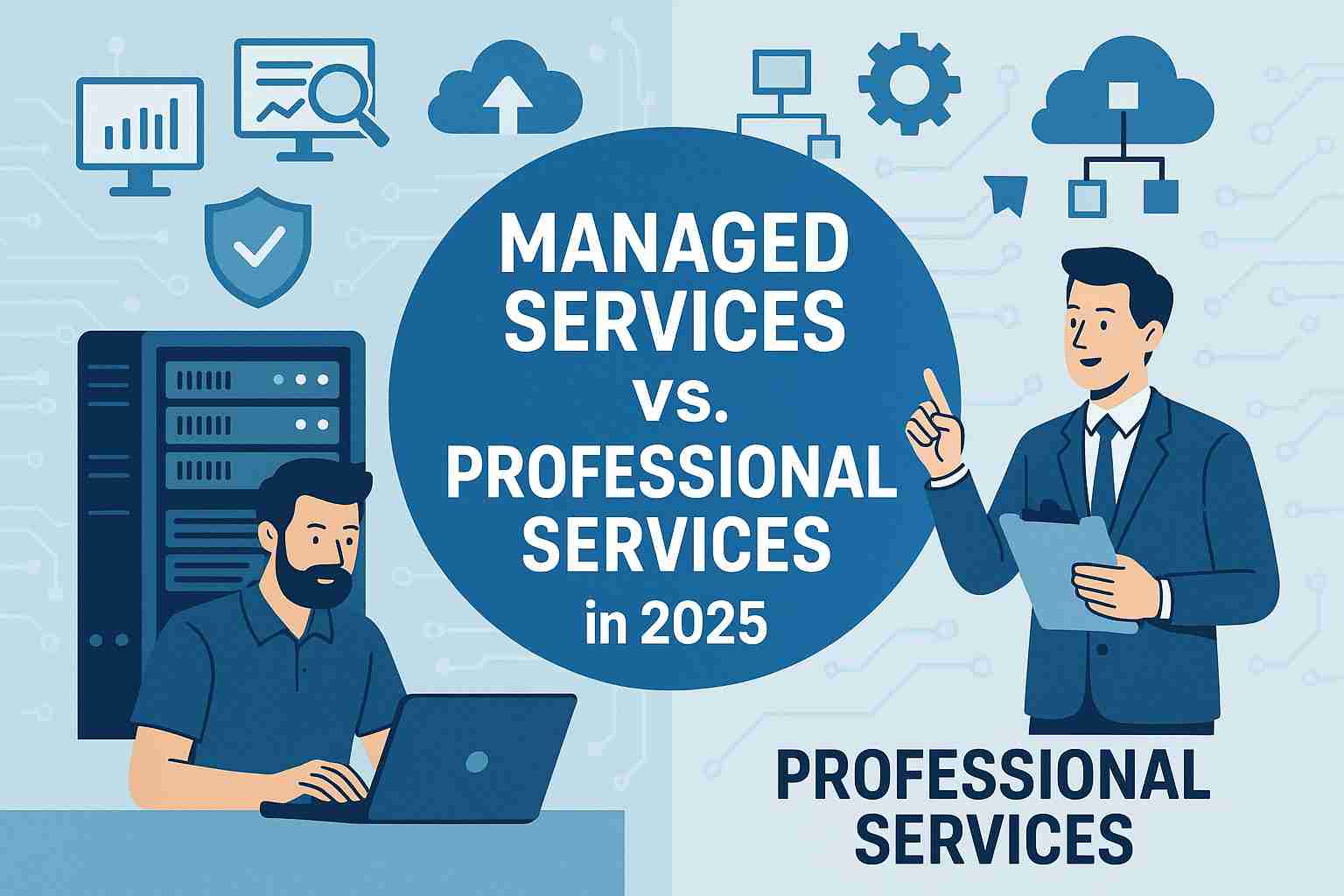
Managed Services vs Professional Services in 2026: Key Differences, Costs, and Use Cases
In 2026, businesses face rapidly increasing IT complexity, heightened cybersecurity threats, and customer expectations that demand always-on, high-performance technology. As organizations scale, the choice between managed services and professional services has become a strategic decision—not just an IT one.
This comprehensive guide explains the differences between managed services and professional services, including use cases, pricing models, benefits, risks, and emerging trends—so you can make an informed decision aligned with your business goals.
1. What Are Professional Services?
Professional services are project-based, time-limited engagements delivered by specialized experts to solve a specific, high-impact business or technology challenge. These services are designed for complex initiatives that require deep technical or regulatory expertise.
Common professional services engagements include:
- Cloud migrations and cloud architecture design
- Software implementations and system integrations
- Cybersecurity risk assessments and penetration testing
- Compliance initiatives (HIPAA, SOC 2, PCI-DSS, NIST)
- Infrastructure modernization and network redesign
Professional services follow a clearly defined scope, timeline, and deliverable set. They are ideal for organizations undergoing digital transformation, regulatory changes, mergers, or major technology upgrades.
2. What Are Managed Services?
Managed services are delivered by a Managed Service Provider (MSP) and focus on the ongoing operation, monitoring, and optimization of your IT environment. Instead of reactive support, managed services emphasize proactive management and long-term stability.
Typical managed services offerings include:
- Endpoint, server, and network monitoring
- 24/7 help desk and user support
- Backup and disaster recovery planning
- Cloud infrastructure management (Microsoft 365, Azure, AWS)
- AI-driven threat detection and security monitoring
Managed services shift day-to-day IT responsibilities away from your internal team, improving uptime, security, and predictability while allowing leadership to focus on core business initiatives.
3. Managed Services vs Professional Services: Side-by-Side Comparison
| Feature | Managed Services | Professional Services |
|---|---|---|
| Engagement Type | Ongoing, long-term partnership | One-time or short-term project |
| Pricing Model | Predictable monthly subscription | Fixed-fee or hourly project pricing |
| Primary Focus | Maintenance, monitoring, and support | Transformation and implementation |
| Expertise | Broad IT coverage with a dedicated team | Highly specialized technical expertise |
| Best For | Operational stability and scalability | Strategic or compliance-driven initiatives |
4. Ideal Use Cases in 2026
Managed Services Are Best When You Need:
- 24/7 monitoring and rapid issue resolution
- Predictable IT costs and budgeting
- Cybersecurity protection amid rising ransomware threats
- Scalable IT support without expanding internal staff
Learn more in our guide on
Managed IT Services in Wisconsin
.
Professional Services Are Best When You Need:
- Cloud or infrastructure migrations
- Security audits or compliance readiness
- Major system implementations or upgrades
- Expert guidance for complex, high-risk projects
Related reading:
Cloud Migration Concerns: What SMBs Need to Know
.
5. Key Benefits of Each Model
Benefits of Managed Services
- Reduced operational costs and downtime
- Improved security posture with continuous monitoring
- Faster issue resolution and better end-user experience
- Strong alignment with business continuity planning
Benefits of Professional Services
- Immediate access to top-tier expertise
- Accelerated project timelines
- Support for innovation and new revenue initiatives
6. Service Model Trends Shaping 2026
In 2026, most organizations operate in hybrid IT environments that blend cloud, on-premises, and remote work infrastructure. As a result:
- MSPs are increasingly integrating AI and automation into managed services
- Professional services are becoming more security- and compliance-focused
- Hybrid service models—combining both approaches—are now the norm
The global managed services market continues to grow at an estimated 10–11% annually, driven by cybersecurity needs, compliance pressures, and talent shortages.
7. Challenges and Considerations
Managed Services Considerations
- Potential vendor lock-in
- Requires trust and transparency with your MSP
Professional Services Considerations
- No built-in long-term support after project completion
- Risk of scope creep without strong project governance
8. How to Choose the Right Model
To choose between managed services and professional services, evaluate:
- Your internal IT capabilities
- Your risk tolerance and compliance needs
- Whether your priority is stability or transformation
Many organizations adopt a hybrid approach—using managed services for daily operations while leveraging professional services for strategic initiatives.
Explore this strategy further in:
Strategic IT Staffing in 2026
.
Final Thoughts
In 2026, the decision between managed services vs professional services depends on whether your business needs continuous operational support or targeted, expert-led projects. Tobin Solutions delivers both—customized to your technology stack, risk profile, and growth goals.
We proudly serve businesses across Milwaukee, Madison, Janesville/Beloit, Lake Geneva, Appleton, all of Wisconsin, and Northern Illinois.
or call 414-443-9999 to plan your next strategic IT move.