Why Physical Security Matters for Small Businesses in Wisconsin
When small business owners think about security, their minds often jump straight to firewalls, antivirus software, and phishing prevention. And while cybersecurity is absolutely critical in today’s digital-first world, there’s another equally important layer that often gets overlooked: physical security.
Cybersecurity and physical security are not separate concerns—they are deeply connected. Even the most advanced cybersecurity tools can be rendered useless if someone can physically access your office, devices, or network infrastructure.
This is especially relevant for small businesses across Wisconsin, including those operating in Milwaukee, Madison, Green Bay, Kenosha, Racine, Appleton, Oshkosh, Waukesha, and the surrounding communities, where offices, warehouses, and storefronts often combine public-facing spaces with sensitive internal systems.
The Overlooked Risk
Cyber threats dominate the news, which makes it easy for business owners to underestimate the risks that come from the physical world. However, physical breaches can be just as damaging—if not more so—than digital attacks. A stolen laptop, an unlocked office door, or an unsecured server room can lead to data breaches, financial loss, downtime, and long-term reputational damage.
In fact, many major cybersecurity incidents begin with a physical lapse. Unauthorized individuals gaining access to a workspace, devices being left unattended, or employees holding doors open for convenience can all create openings for attackers. Once inside, cyber defenses are much easier to bypass.
Why Physical Security Matters for Small Businesses
Small and mid-sized businesses are especially vulnerable because they often lack dedicated security teams or formal access controls. Unfortunately, attackers know this—and actively target organizations they believe are easier to exploit. This is a growing concern for local businesses throughout Wisconsin’s urban centers and smaller towns alike.
- Protects Hardware and Sensitive Data: Servers, desktops, laptops, and external drives hold important business and customer info. If someone steals or messes with these devices, encryption and software protections may not prevent exposure.
- Reduces Insider and Internal Risks: Some threats come from within your organization. Limiting access to offices, network closets, and server rooms helps reduce accidental misuse and insider threats.
- Supports Regulatory Compliance: Compliance frameworks and industry rules, like HIPAA, PCI DSS, and SOC 2, need digital and physical safeguards. Weak physical security can lead to compliance issues, even if your IT systems are safe.
- Prevents Business Disruption: Theft, vandalism, or unauthorized access can halt operations. They also delay services and hurt customer trust—especially damaging for small businesses that rely on local reputation in cities like Milwaukee, Madison, and Green Bay.
Practical Steps to Strengthen Physical Security
Improving physical security doesn’t require turning your office into a fortress. Small, intentional changes can greatly lower risk. When paired with strong cybersecurity practices, the impact is even more significant for Wisconsin businesses operating in shared buildings, downtown offices, industrial parks, or retail spaces.
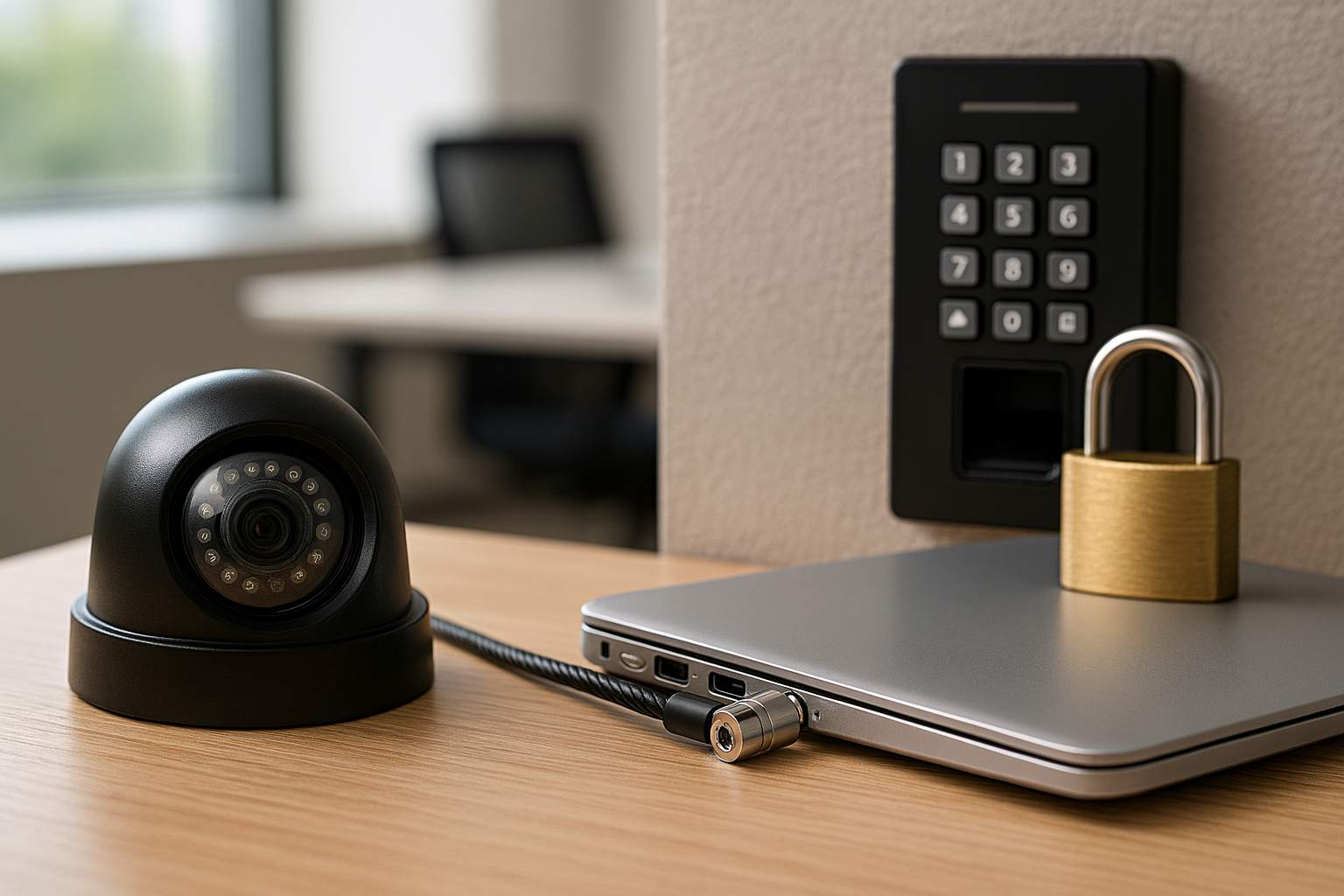
- Control Access to Sensitive Areas: Use keycards, PIN codes, or biometrics for offices, server rooms, and network closets. Avoid shared keys and track who has access.
- Secure Devices and Infrastructure: Lock server rooms. Use cable locks for laptops when needed. Make sure networking equipment is hard to reach for unauthorized people.
- Encrypt All Business Devices: Full-disk encryption keeps sensitive data safe. If a device is lost or stolen, only those with the right credentials can access it.
- Install Surveillance and Alarm Systems: Security cameras, door sensors, and alarms can deter crime. They also assist in investigating incidents.
- Train Employees on Physical Security Awareness: Employees need to know policies. This includes locking doors, questioning unknown visitors, securing devices, and reporting suspicious behavior. They should approach these topics like phishing or password hygiene.
The Bottom Line: Security Is a Holistic Strategy
Cybersecurity and physical security go hand in hand. Focusing on one while neglecting the other leaves dangerous gaps in your defenses. A truly secure business takes a complete approach. It protects people, spaces, devices, and data all at once.
For small businesses across Wisconsin, this can feel overwhelming. You need to understand the risks in your environment. Then, identify the necessary controls. Finally, learn the correct installation methods. This requires expertise and careful planning.