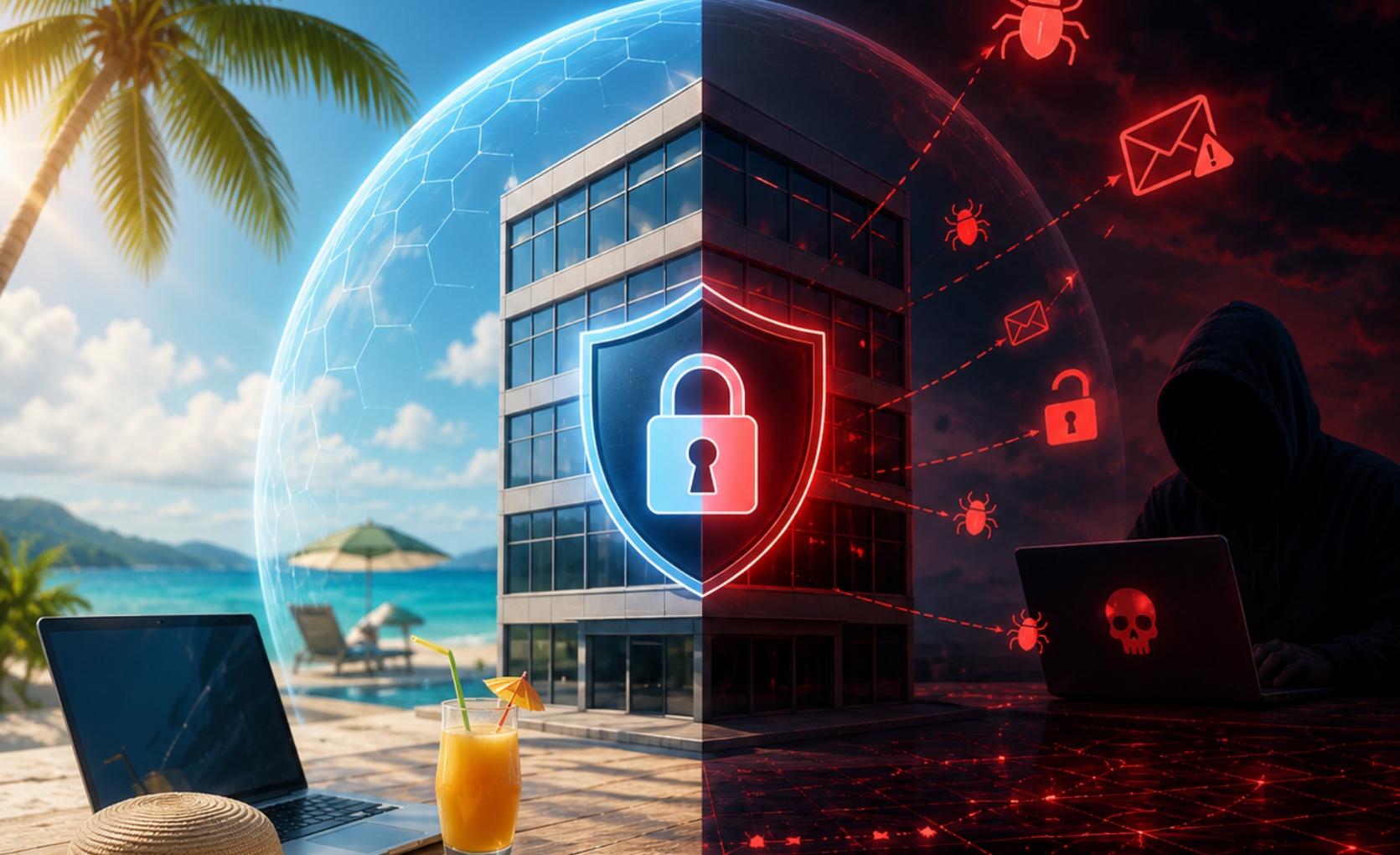
Summer is usually associated with vacations, long weekends, and lighter schedules. But for businesses, it can also become one of the most vulnerable times of the year for cybersecurity threats.
As employees travel, work remotely, and take time off, daily operations often become less structured. Teams move faster, staffing levels shift, and communication relies more heavily on email, messaging apps, and remote collaboration tools.
Cybercriminals know this.
In fact, many attackers intentionally increase phishing and social engineering campaigns during vacation season because businesses are more likely to let their guard down.
Why Summer Creates More Cybersecurity Risks
During busy vacation periods, businesses often experience:
✓ Reduced staffing and IT coverage
✓ Faster approval processes
✓ Increased remote access activity
✓ More reliance on mobile devices and public WiFi
✓ Delayed communication between departments
These small operational gaps create opportunities for attackers to slip through unnoticed.
An employee rushing to finish tasks before time off may quickly approve an invoice without verifying it. A manager working remotely may click a suspicious file sharing link while traveling. A temporary staff member may not recognize the warning signs of a phishing attempt.
Cybercriminals take advantage of these moments of distraction and urgency.
Common Summer Cyber Scams Businesses Face
Modern cyberattacks are becoming more sophisticated, especially with the rise of artificial intelligence tools.
Some of the most common summer threats include:
Fake Invoices
Attackers send realistic looking invoices pretending to be trusted vendors or service providers. These emails often create urgency by claiming payments are overdue or time sensitive.
Vendor Impersonation Emails
Cybercriminals may impersonate suppliers, partners, or internal leadership to request payments, sensitive information, or account changes.
AI Generated Phishing Messages
Artificial intelligence now allows scammers to write polished, convincing emails with fewer grammar mistakes and more personalized messaging.
Suspicious File Sharing Links
Fake cloud storage notifications or shared document links are commonly used to steal passwords or install malware onto devices.
These attacks are designed to look normal enough that employees respond without hesitation.
Remote Work and Travel Increase Exposure
Summer travel also introduces additional cybersecurity concerns.
Employees working from hotels, airports, coffee shops, or public spaces may unknowingly connect to unsecured networks or expose company devices to unnecessary risk.
Businesses should encourage employees to:
- Use secure VPN connections
- Avoid unknown public WiFi when possible
- Enable multi factor authentication
- Keep devices updated while traveling
- Report suspicious emails or login attempts immediately
Even a single compromised account can create major operational disruptions.
Building a Smarter Summer Cybersecurity Strategy
Cybersecurity is no longer just about reacting to threats after they happen. Businesses need proactive strategies that help maintain protection before problems occur.
Strong summer cybersecurity planning should include:
- Employee cybersecurity awareness training
- Verification procedures for payments and sensitive requests
- Regular monitoring of suspicious activity
- Secure remote access policies
- Updated password and authentication practices
- Ongoing IT support and security assessments
The businesses that maintain the strongest security posture are usually the ones preparing before busy travel seasons begin.
Final Thoughts
Summer should be a season for business growth and flexibility, not unnecessary cybersecurity risk.
As cybercriminals continue using artificial intelligence and social engineering tactics to target distracted teams, businesses need to stay proactive, informed, and prepared.
A few smart precautions today can help reduce major disruptions tomorrow.
→ Is your business prepared for the increase in summer cyber threats?
↳ Partner with Tobin Solutions to help maintain smarter, more secure business operations throughout the season.